
Medical emergency? Call 911

Today 7:30 am - 6:00 pm

24/7 member line (310) 555-0177

The calm, plant-filled reception lounge at the Brighton Way clinic

Medicine with the time it actually takes

Concierge primary care in Beverly Hills. A panel capped at 240 patients per physician, 45-minute visits, and a doctor who answers at 2 am.

  • 240 patients per physician
  • 45-minute visits
  • 24/7 physician line

The practice in numbers

  • 240

    Patients per physician

    Capped, against a US average near 2,300

  • 45 min

    Standard visit length

    Annual visits run 60 minutes

  • 96%

    Same-day offers met

    Members requesting acute care, 2025 sample

  • 11 min

    Median member line response

    Physician on the line, not a service

Figures shown are sample data for this demonstration website and are not audited practice statistics.

Two things we do differently

Everything else follows from the panel size. These are the two programmes where the difference is easiest to see.

Concierge primary care at Aurelia Concierge Medicine

Concierge primary care

One physician, a capped panel, and enough time in the room to actually finish the conversation.

Concierge primary care is ordinary internal medicine with the constraints removed. Your physician carries a panel capped at 240 patients (sample figure) instead of the 2,000 to 2,500 typical of an insurance-funded practice, which is what makes a same-day appointment and a 45-minute visit arithmetically possible.

Panel size
240 per physician
Standard visit
45 minutes
Member line response
Under 15 minutes
About concierge primary care
Executive physical at Aurelia Concierge Medicine

Executive physical

Everything in a single day, read by the physician who will look after the findings.

The executive physical compresses what would otherwise be six appointments across three months into one scheduled day. You arrive fasting at 7:30 am and leave in the afternoon with a bound report and a plan you have already discussed.

Time on site
5 to 6 hours
Laboratory markers
62 analytes
Report delivered
Same day
About executive physical

The screening calendar, decade by decade

Preventive screening is not one annual event. Move sideways through the age bands to see what is usually due, and how often.

Four age bands. Your own calendar depends on personal and family history.

Four age bands, scroll sideways

18 to 39

Baseline years

The goal in this band is a clean baseline: know your numbers before anything drifts, and document family history while relatives can still tell you about it.

  • Blood pressure

    Every visit, at least every 2 years

    All adults

  • Lipid panel with ApoB

    Baseline at 20, then every 4 to 6 years

    All adults, sooner with family history

  • Hemoglobin A1c or fasting glucose

    Every 3 years from 35

    Earlier with BMI over 25 plus one risk factor

  • Cervical cytology

    Every 3 years from 21, or co-testing every 5 years from 30

    Patients with a cervix

  • Chlamydia and gonorrhoea

    Annually to 24, then by risk

    Sexually active women and at-risk adults

  • HIV screening

    At least once, then by risk

    All adults 15 to 65

  • Hepatitis C antibody

    Once in adulthood

    All adults 18 to 79

  • Depression screen (PHQ-9)

    Annually

    All adults

40 to 49

The decade things start

Cardiovascular and cancer screening both begin in earnest here. This is the decade where a calcium score or an ApoB result actually changes what we prescribe.

  • Mammography

    Every 1 to 2 years from 40

    Patients with breast tissue

  • Colorectal cancer screening

    From 45: colonoscopy every 10 years, or FIT annually

    All adults, earlier with family history

  • Coronary artery calcium (CAC) score

    Once, repeat in 5 years if zero

    Intermediate risk, discussed case by case

  • Lipoprotein(a)

    Once in a lifetime

    All adults, it is genetically set

  • Hemoglobin A1c

    Every 3 years, annually if prediabetic

    All adults from 35

  • Thyroid function (TSH)

    By symptoms, not routine

    Symptomatic or with autoimmune history

  • Skin check

    Annually

    Fair skin, sun exposure or family history

  • Eye exam with intraocular pressure

    Every 2 to 4 years

    All adults

50 to 64

Peak surveillance

The heaviest screening decade. Most of these are once-every-few-years tests, and we sequence them so you are not doing four things in one month.

  • Colonoscopy

    Every 10 years, or every 5 with adenomas

    All adults from 45

  • Mammography

    Annually or every 2 years

    Patients with breast tissue

  • Low-dose CT chest

    Annually from 50

    20 pack-year history, currently smoking or quit within 15 years

  • Prostate-specific antigen (PSA)

    Shared decision from 50, from 45 if higher risk

    Patients with a prostate

  • Bone density (DXA)

    From 65, earlier with risk factors

    Postmenopausal patients, long-term steroid use

  • Hepatitis B surface antigen

    Once, by risk

    Higher-prevalence exposure history

  • Abdominal aortic ultrasound

    Once from 65

    Men who have ever smoked

  • Cognitive and hearing screen

    Annually from 60

    All adults

65 and over

Function and independence

Screening shifts from finding disease early to protecting function: falls, bone density, hearing, vision, cognition, and deprescribing what is no longer earning its place.

  • Bone density (DXA)

    Every 2 years

    All women 65+, men 70+ or with risk factors

  • Falls risk and gait assessment

    Annually

    All adults 65+

  • Cognitive screen (MoCA)

    Annually

    All adults 65+

  • Audiometry

    Every 1 to 3 years

    All adults 65+

  • Vision with glaucoma check

    Every 1 to 2 years

    All adults 65+

  • Medication review and deprescribing

    Every 6 months

    Anyone on 5 or more medications

  • Colorectal screening

    Continue to 75, then individualised

    By health status and life expectancy

  • Abdominal aortic ultrasound

    Once between 65 and 75

    Men who have ever smoked

General information only, not medical advice. Screening intervals, vaccine timing and preparation steps vary by personal and family history. Talk with your physician about what applies to you.

How to prepare, by visit type

Fasting windows, what to bring and what to do the day before. Five visit types, each with different rules, because a lipid panel and a stress echocardiogram do not want the same morning.

Annual wellness visit

60 minutes

Fasting: Fast 9 to 12 hours if we ordered a lipid panel, water and black coffee are fine

Bring with you

  • Every medication and supplement in its own bottle, not a list
  • Home blood pressure readings from the last two weeks
  • Names and contact details of any specialists you see
  • Dates of your last colonoscopy, mammogram, DXA and eye exam

Before you come

  • Complete the intake questionnaire in the portal 48 hours ahead
  • Update family history: first-degree relatives, condition, age at diagnosis
  • Write down your three most important questions, we work through them

A written plan lands in your portal within 24 hours, with anything we ordered and why.

Preparing for a annual wellness visit at Aurelia

Fasting laboratory panel

20 minutes

Fasting: Nothing but water for 9 to 12 hours; take your regular morning medication unless told otherwise

Bring with you

  • Photo ID and your member card
  • A list of any supplements taken in the last 72 hours, biotin especially
  • Something to drink and eat for straight after the draw

Before you come

  • Avoid alcohol for 24 hours; it shifts triglycerides and liver enzymes
  • Skip heavy exercise the day before, it can raise creatine kinase
  • Hydrate well the evening before; it makes the draw faster

Most panels release within 1 to 3 business days. See the turnaround table on the patient page.

Preparing for a fasting laboratory panel at Aurelia

Executive physical day

5 to 6 hours, one day

Fasting: Fast from 9 pm the night before; the day starts with the blood draw at 7:30 am

Bring with you

  • Comfortable clothes and trainers for the exercise stress test
  • Glasses and hearing aids if you use them
  • Prior imaging on disc or a release form for the imaging centre
  • Your insurance card for anything billed outside the day rate

Before you come

  • No caffeine for 12 hours before the stress echocardiogram
  • Hold beta blockers only if your physician has written that instruction
  • Clear the whole day; the results consultation is at the end, not later

A bound report and a 60-minute consultation the same afternoon, plus a copy in the portal.

Preparing for a executive physical day at Aurelia

Sleep medicine consultation

45 minutes plus a home study

Fasting: No fasting

Bring with you

  • Two weeks of a sleep diary, bedtime and wake time
  • Wearable data export if you have one
  • Your partner if they can describe your snoring or pauses
  • A list of anything you take to sleep, including melatonin and alcohol

Before you come

  • Complete the Epworth Sleepiness Scale and STOP-BANG in the portal
  • Keep your normal schedule the week before, do not try to fix it first

Home sleep apnoea testing is dispatched within 48 hours; scoring takes 5 to 7 business days.

Preparing for a sleep medicine consultation at Aurelia

Travel medicine appointment

40 minutes

Fasting: No fasting

Bring with you

  • Full itinerary with dates, countries and rural or urban stays
  • Your immunisation record, including childhood vaccines
  • Details of any planned activities: altitude, diving, animal contact

Before you come

  • Book 6 to 8 weeks ahead; several vaccines need a multi-dose series
  • Check whether your destination requires a yellow fever certificate

You leave with a written itinerary-specific plan, prescriptions and a printed vaccine record.

Preparing for a travel medicine appointment at Aurelia

General preparation guidance only, not medical advice. Always follow the specific instructions your physician gives you, particularly about holding or continuing medication.

Adult immunisation, on a timeline

Childhood schedules are familiar. The adult one is not, and it is mostly a small number of vaccines that arrive at specific ages or before specific trips.

Six life stages, scroll sideways

Every year

Whatever your age

  • Influenza

    One dose each autumn

    September to October is ideal; protection wanes over a season.

  • COVID-19

    Per the current season's guidance

    Timing is reviewed annually and can be given with the flu shot.

19 to 26

Catch-up decade

  • HPV (Gardasil 9)

    2 or 3 doses, through age 26

    Three doses if the series starts at 15 or later.

  • Tdap then Td

    One Tdap, then a booster every 10 years

    Tdap again in each pregnancy, between 27 and 36 weeks.

  • MMR and varicella

    Two doses if no evidence of immunity

    We check titres first if records are missing.

  • Meningococcal ACWY

    By risk and living situation

    Dormitory living, asplenia, travel to the meningitis belt.

27 to 49

Risk-based years

  • HPV

    Shared decision from 27 to 45

    Less benefit after likely exposure, but still worth discussing.

  • Hepatitis B

    2 or 3 dose series for all adults 19 to 59

    Now recommended universally in this age range.

  • Hepatitis A

    Two doses, 6 months apart

    Travel, chronic liver disease, occupational risk.

  • Td booster

    Every 10 years

    Brought forward after a dirty wound if it has been over 5 years.

50 to 64

Shingles and pneumonia

  • Recombinant zoster (Shingrix)

    Two doses, 2 to 6 months apart, from 50

    Also for immunocompromised adults from 19.

  • Pneumococcal (PCV20 or PCV21)

    From 50, single dose for most

    Earlier with chronic lung, heart, liver or kidney disease.

  • RSV

    Single dose from 60, shared decision from 50 with risk

    Given once, not annually, under current guidance.

65 and over

Older adult schedule

  • High-dose or adjuvanted influenza

    One dose each autumn

    Preferred over standard dose from 65.

  • Pneumococcal

    Complete the series if not already done

    We check your record rather than repeat unnecessarily.

  • RSV

    Single dose from 75, and 60 to 74 with risk factors

    Chronic heart or lung disease, diabetes, care facility.

  • Zoster

    Two doses if never given

    Give even if you have had shingles before.

Before you travel

Destination-led

  • Typhoid

    Oral 4 doses or injection, 1 to 2 weeks ahead

    South Asia, parts of Africa and South America.

  • Yellow fever

    Single dose, at least 10 days before entry

    Certificate required by some countries.

  • Japanese encephalitis

    Two doses over 28 days

    Rural Asia, longer stays or wet season.

  • Rabies pre-exposure

    Two doses over 7 days

    Remote travel, animal work, delayed access to care.

General information, not medical advice. Adult immunisation depends on your record, pregnancy, immune status, occupation and travel. We check your history before giving anything.

The people who hold your record

Six clinicians, one shared record. Open a name to see training, board certification and languages.

Dr. Nadia Rahimi, Founding physician, internal medicine at Aurelia Concierge Medicine
Dr. Elliot Vance, Preventive cardiology at Aurelia Concierge Medicine
Dr. Priya Raghunathan, Women's health and primary care at Aurelia Concierge Medicine
Dr. Marcus Oyelaran, Sleep medicine and pulmonary at Aurelia Concierge Medicine
Sofia Bergström, Registered dietitian nutritionist at Aurelia Concierge Medicine
Grace Tanaka, Family nurse practitioner at Aurelia Concierge Medicine

Dr. Nadia Rahimi, MD, FACP

Dr. Rahimi founded Aurelia in 2016 after eleven years in a large Los Angeles internal medicine group, where she carried a panel of more than 2,200 patients and had twelve minutes per visit. She has written since about why that arithmetic, not the clinicians inside it, is what breaks primary care.

Medical degree
University of California, San Francisco
Residency
Internal medicine, Cedars-Sinai Medical Center
Chief resident
Internal medicine, 2013
Licensure
California, active (sample record)
Board certification
American Board of Internal Medicine, Internal Medicine. Fellow, American College of Physicians
Languages
English, Farsi, French
Full profile

Dr. Vance spent nine years in interventional cardiology before concluding that the more interesting work sat twenty years earlier in the timeline. He now runs the preventive cardiology programme and sees members jointly with their primary physician rather than in a parallel clinic.

Medical degree
Johns Hopkins University School of Medicine
Residency
Internal medicine, Massachusetts General Hospital
Fellowship
Cardiovascular disease, UCLA Medical Center
Licensure
California, active (sample record)
Board certification
American Board of Internal Medicine, Cardiovascular Disease. Fellow, American College of Cardiology. Clinical Lipidology, certified
Languages
English, Spanish
Full profile

Dr. Raghunathan practised obstetrics and gynaecology for seven years before moving into primary care, which means the women's health work at Aurelia is done in-house rather than referred out and waited on.

Medical degree
Western University of Health Sciences, COMP
Residency
Obstetrics and gynaecology, Kaiser Permanente Los Angeles
Additional training
Menopause Society certification, 2021
Licensure
California, active (sample record)
Board certification
American Board of Obstetrics and Gynecology. Fellow, American College of Obstetricians and Gynecologists. Menopause Society Certified Practitioner
Languages
English, Tamil, Hindi
Full profile

Dr. Oyelaran is board-certified in both sleep medicine and pulmonary disease, which matters because breathlessness at night and breathlessness in the day are frequently the same problem seen from two angles.

Medical degree
Howard University College of Medicine
Residency
Internal medicine, Emory University Hospital
Fellowship
Pulmonary and critical care, then sleep medicine, Stanford
Licensure
California, active (sample record)
Board certification
American Board of Internal Medicine, Sleep Medicine. American Board of Internal Medicine, Pulmonary Disease
Languages
English, Yoruba
Full profile

Sofia is a registered dietitian nutritionist and a board-certified specialist in sports dietetics. She spent six years with a professional sports organisation before moving into clinical nutrition, and she brings the same measurement discipline to members who are not athletes.

Degree
MS Clinical Nutrition, New York University
Internship
Dietetic internship, Cedars-Sinai Medical Center
Certification
CSSD, 2019
Licensure
California registered dietitian (sample record)
Board certification
Registered Dietitian Nutritionist, Commission on Dietetic Registration. Board Certified Specialist in Sports Dietetics
Languages
English, Swedish
Full profile

Grace covers the same-day acute slots, runs the immunisation and travel clinic, and performs most of the minor procedures at the Brighton Way location. She spent eight years in emergency nursing before qualifying as a nurse practitioner.

Degree
MSN, University of California, Los Angeles
Prior practice
Emergency department nursing, 8 years
Certification
Certificate of Knowledge in Travel Health
Licensure
California, active (sample record)
Board certification
Family Nurse Practitioner, Board Certified (AANP). Certificate in Travel Health, ISTM
Languages
English, Japanese
Full profile

Provider names, training institutions, board certifications and licence details on this demonstration website are illustrative samples and do not describe real clinicians.

Membership, priced plainly

Three household tiers and one programme you can buy without joining. Membership is a service fee, not health insurance, and it does not replace your plan.

Four options, scroll sideways

Essential

$295per month, billed annually

One adult who wants unhurried primary care and real access, without the added programmes.

  • Same-day or next-day appointments
  • 45-minute standard visits
  • 24/7 member line answered by a physician
  • Annual comprehensive visit, 60 minutes
  • Direct messaging and physician-reviewed results

Sample pricing. Enrolment: $500 one-time enrolment, covering records transfer and the 90-minute intake visit.

Most chosen

Signature

$545per month, billed annually

The full programme: preventive cardiology, an annual executive physical and the nutrition arc included.

  • Everything in Essential
  • Annual executive physical day, included
  • Preventive cardiology assessment with ApoB and Lp(a)
  • Six-visit nutrition programme with a registered dietitian
  • DXA body composition, twice yearly

Sample pricing. Enrolment: $500 one-time enrolment, waived when two adults join together.

Family office

$1,480per month, billed annually

Two adults and up to three dependants over 16, with a named coordinator across the whole household.

  • Signature benefits for two adults
  • Up to three dependants aged 16 and over
  • A named care coordinator for the household
  • Two executive physicals per year
  • Travel medicine for the whole family, consultation included

Sample pricing. Enrolment: $1,200 one-time household enrolment.

Executive physical

$3,950per day, no membership needed

One day, 62 laboratory analytes, a stress echocardiogram and a results consultation the same afternoon.

  • Open to non-members
  • Members receive a sample 20% reduction
  • Itemised superbill for out-of-network claims
  • Report delivered the same day

Sample pricing. Imaging performed at partner centres is billed separately.

All prices on this demonstration website are sample figures. Membership is not health insurance and does not cover hospital, specialist, imaging or prescription costs.

What the insurance words actually mean

Deductible, copay, coinsurance, out-of-pocket maximum. Six terms explain almost every line on an explanation of benefits, and knowing them changes what you agree to before a procedure.

  • Premium

    The fixed amount you or your employer pay each month to keep an insurance policy active, whether you use care or not.

    Your premium is separate from the Aurelia membership fee. Membership is not insurance and does not replace it.

  • Deductible

    What you pay out of pocket for covered services in a plan year before the insurer starts paying its share.

    Sample: on a $2,500 deductible plan, an outside MRI billed at $1,400 is paid by you and counts toward the $2,500.

  • Copay

    A flat fee for a specific service, usually collected at the time of the visit.

    Sample: $40 for an in-network specialist visit, regardless of how long the appointment lasts.

  • Coinsurance

    A percentage of the cost you keep paying after the deductible is met, until you reach the out-of-pocket maximum.

    Sample: at 20% coinsurance, a $3,000 procedure after your deductible leaves you $600.

  • Out-of-pocket maximum

    The ceiling on what you pay for covered in-network care in a plan year. After it, the plan pays 100% of covered services.

    Sample: a $7,500 individual maximum. Premiums and non-covered services do not count toward it.

  • Superbill

    An itemised receipt with diagnosis and procedure codes that you submit to your insurer for out-of-network reimbursement.

    We generate one after every visit. Whether it is reimbursed is between you and your plan.

  • In-network vs out-of-network

    Networks are the list of clinicians your insurer has contracted rates with. Outside it, you usually pay more, or everything.

    Aurelia is a direct-pay practice. Labs, imaging and specialists we refer to are usually billed to your plan normally.

  • Prior authorisation

    Approval an insurer requires before it will cover certain drugs, scans or procedures.

    Our care coordinator files these for you. Typical turnaround is 3 to 10 business days depending on the plan.

  • Explanation of benefits (EOB)

    The statement your insurer sends after a claim. It is not a bill, it is the arithmetic behind one.

    Bring an EOB you do not understand to any visit and we will read it with you.

General information about United States health plans, not financial, legal or medical advice. Plans differ; check your own plan documents and speak to your insurer.

Built like a private study

No waiting room, because nobody waits. Acoustic separation between every consulting room, an on-site laboratory at Brighton Way, and level access throughout both main clinics.

  • No waiting room. You are taken straight to a consulting room. The lounge exists for the people bringing you, not for queueing.
  • On-site laboratory. Phlebotomy and same-day chemistry at Brighton Way, so most panels are back before you have finished lunch.
  • Quiet by design. Acoustic separation between every room. Nobody overhears your consultation, and you do not overhear anyone else's.
  • Step-free throughout. Level access at both main clinics, lift access to every floor, and accessible examination tables.
  • Valet and validation. Valet at Brighton Way, validated underground parking at Sunset Plaza, free surface parking at the Palisades rooms.
  • Refreshment, not vending. Filtered water, herbal tea and fruit. Nothing is for sale anywhere in the building.
See the clinics
Interior of the Aurelia member lounge and consulting suites
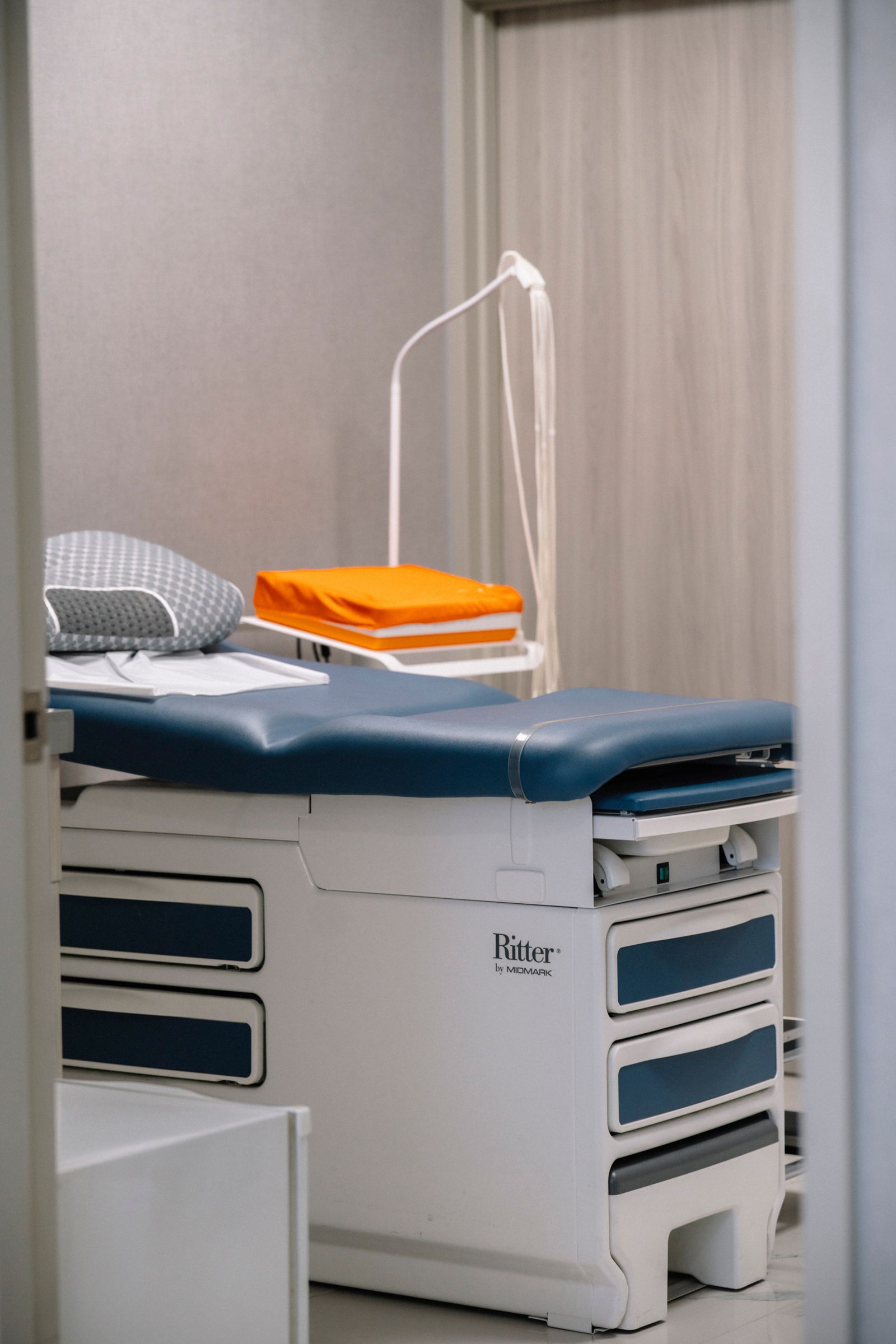
A consulting room at the Brighton Way clinic

Three clinics across the Westside

Brighton Way is the flagship and the home of the executive physical. Sunset Plaza carries women's health and sleep medicine.

Three clinics, scroll sideways

Exterior of the Brighton Way clinic in Beverly Hills

Brighton Way clinic

9440 Brighton Way, Suite 400
Beverly Hills, CA 90210

Today 7:30 am - 6:00 pm

  • Flagship location
  • On-site laboratory
  • Executive physical suite
Exterior of the Sunset Plaza clinic in West Hollywood

Sunset Plaza clinic

8620 Sunset Boulevard, Suite 210
West Hollywood, CA 90069

Today 8:00 am - 5:30 pm

  • Women's health suite
  • Sleep medicine clinic
  • Nutrition consulting rooms
Exterior of the Palisades consulting rooms in Pacific Palisades

Palisades consulting rooms

15300 Sunset Boulevard, Suite 105
Pacific Palisades, CA 90272

Today 8:30 am - 4:00 pm

  • Satellite rooms
  • Scheduled visits only
  • Phlebotomy three days a week

From first call to your written plan

Five steps over about thirteen weeks. Then request an appointment at the bottom of this page, and a coordinator calls you within one business day.

  1. Week 0

    Discovery call

    Twenty minutes with the membership team. We describe what membership does and does not cover, and you decide whether it fits.

  2. Weeks 1 to 3

    Records and history

    We request records from every practice you have seen and reconcile them into a single history, including imaging and pathology.

  3. Week 3

    Comprehensive intake

    Ninety minutes with your physician: full examination, baseline laboratory panel, family-history map and a screening audit.

  4. Week 4

    Your written plan

    A screening calendar to age 75, a reconciled medication list with the rationale for each, and the two or three changes worth making first.

  5. Week 13

    Ninety-day review

    A follow-up visit to check what has actually changed, repeat anything that needed a re-test, and set the ongoing interval.

  6. Ongoing

    Care at the interval you need

    Scheduled reviews, unlimited access for anything acute, and a physician on the line at any hour on (310) 555-0177.

Request an appointment

Four short steps. Members and prospective members both start here. Nothing is sent until you submit, and this demonstration form stores nothing.

Step 1 of 4Nothing is sent until you submit

Who is this appointment for?
What would you like to discuss?

This is a demonstration form. Please do not enter real personal health information.

Where and when suits you?
Preferred time of day
How should we reach you?

Please enter your name.

Please enter a phone number we can reach you on.

Please enter a valid email address.

If this is a medical emergency, call 911 or go to the nearest emergency department. Members with an urgent question should call the 24/7 line on (310) 555-0177.

Request received

Thank you. Our membership team reviews appointment requests every business morning and afternoon, and you will hear from us within one business day.

  • A coordinator calls you on the number you gave to confirm the slot and the physician.
  • If you are new, we send the records release form so your history arrives before the visit.
  • You get a portal invitation with the intake questionnaire and any preparation instructions.

Do not wait for our reply if your symptoms change. Call the 24/7 member line on (310) 555-0177, or 911 in an emergency.

General information only, not medical advice. Screening intervals, vaccine timing and preparation steps vary by personal and family history. Talk with your physician about what applies to you.

Cookie preferences

Choose which cookies you allow. You can change this at any time from the link in the footer.